
Golden-cheeked Warbler
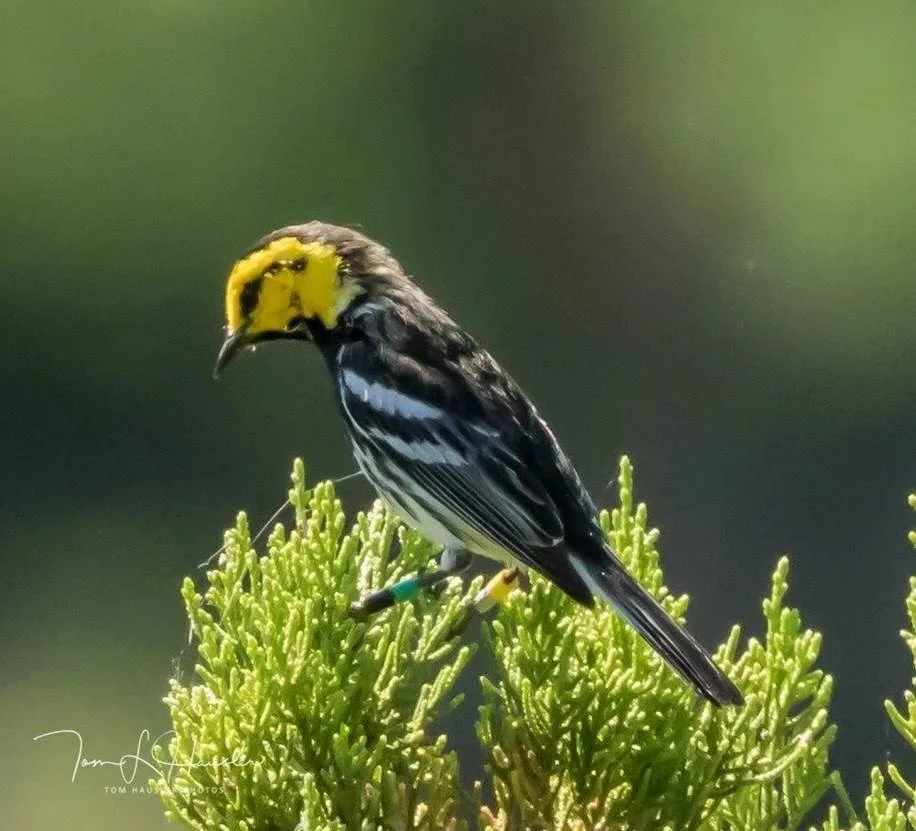
Westcave Preserve provides a unique patchwork of habitats for resident and migratory bird species alike. Westcave is currently home to approximately 160 documented bird species. Many of these species are neotropical migrants or grassland birds, groups that have declined dramatically across North America over the past 40 years. Among them is the Golden-cheeked Warbler, a federally endangered songbird that nests only in Central Texas and depends on mature Ashe juniper-oak woodlands for breeding habitat. Because of its limited breeding range and ongoing habitat pressures, monitoring this species helps conservation partners better understand local population trends, habitat use, and long-term survival.
HOW WE MONITOR WARBLERS
As part of a focused effort to support avian research at the Preserve, Westcave conservation staff conduct species-specific monitoring of Golden-cheeked Warblers through seasonal surveys. In conjunction with the City of Austin and Travis County, staff also participate in warbler banding efforts, which help track dispersal, survival, and return rates over time.
Territory Mapping
During the breeding season, conservation staff repeatedly survey specific areas of the preserve to track individual singing activity and movement patterns. This helps us estimate the number of breeding territories within the preserve.
Banding
With our regional partners, birds are safely captured, fitted with lightweight colored leg bands, and released. These bands allow researchers to identify individual birds in future seasons and learn more about survival, movement, and return rates.
Protecting Native Songbirds
During the breeding season, Westcave also monitors Brown-headed Cowbird activity. Cowbirds are brood parasites, meaning they lay their eggs in the nests of other birds. This can reduce the success of native songbirds, including Golden-cheeked Warblers.
As part of regional conservation efforts, cowbird management helps give native birds a better chance to successfully raise their own young.