
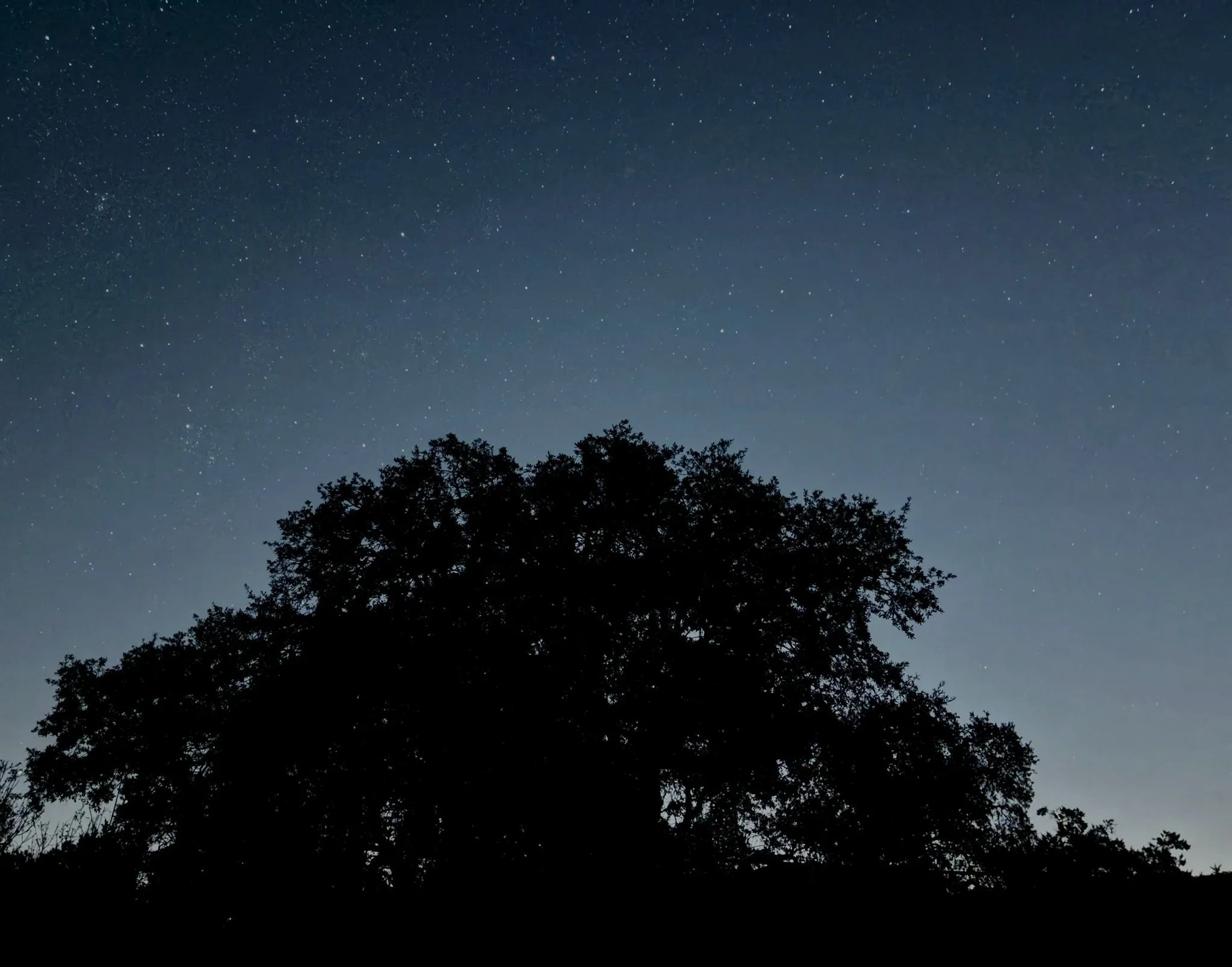
Dark Sky Research
Monitoring night skies to better understand light pollution, ecosystem health, and the value of natural darkness.
Westcave collects sky quality data and offers public programs that connect people to the night sky. As part of our commitment to preserving natural nightscapes, Westcave collects quantitative data about night sky quality while also hosting educational events for the public.
Through collaborative efforts with the Globe at Night Monitoring Network and DarkSky Texas, this data contributes to a broader understanding of how night sky quality changes over time. These efforts help document the effects of artificial light on natural ecosystems, wildlife, and human well-being.
Protecting Natural Landscapes
Protecting the night sky begins on the ground. In addition to monitoring sky brightness, Westcave has updated lighting across the Preserve to better align with responsible outdoor lighting principles.
The lighting projects were designed to minimize glare, reduce light trespass, and limit unnecessary light pollution while still meeting the needs of staff and visitors after dark. Responsible outdoor lighting uses light only where and when it is needed, conserves energy, reduces harmful effects on wildlife, and helps protect the night sky.
These changes support a safer and more intentional nighttime environment while helping preserve the natural darkness that wildlife and people depend on.
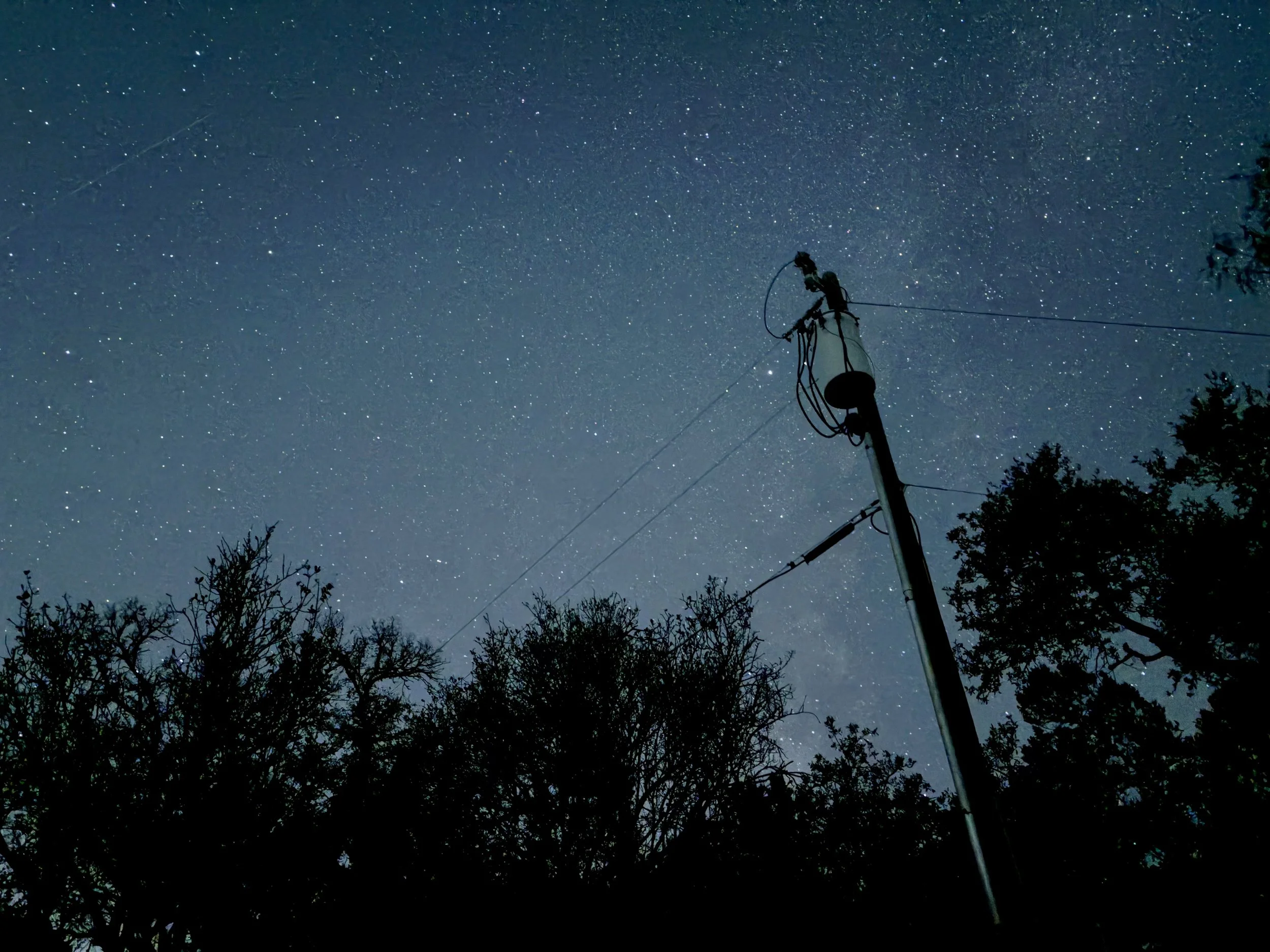
11/12/2025
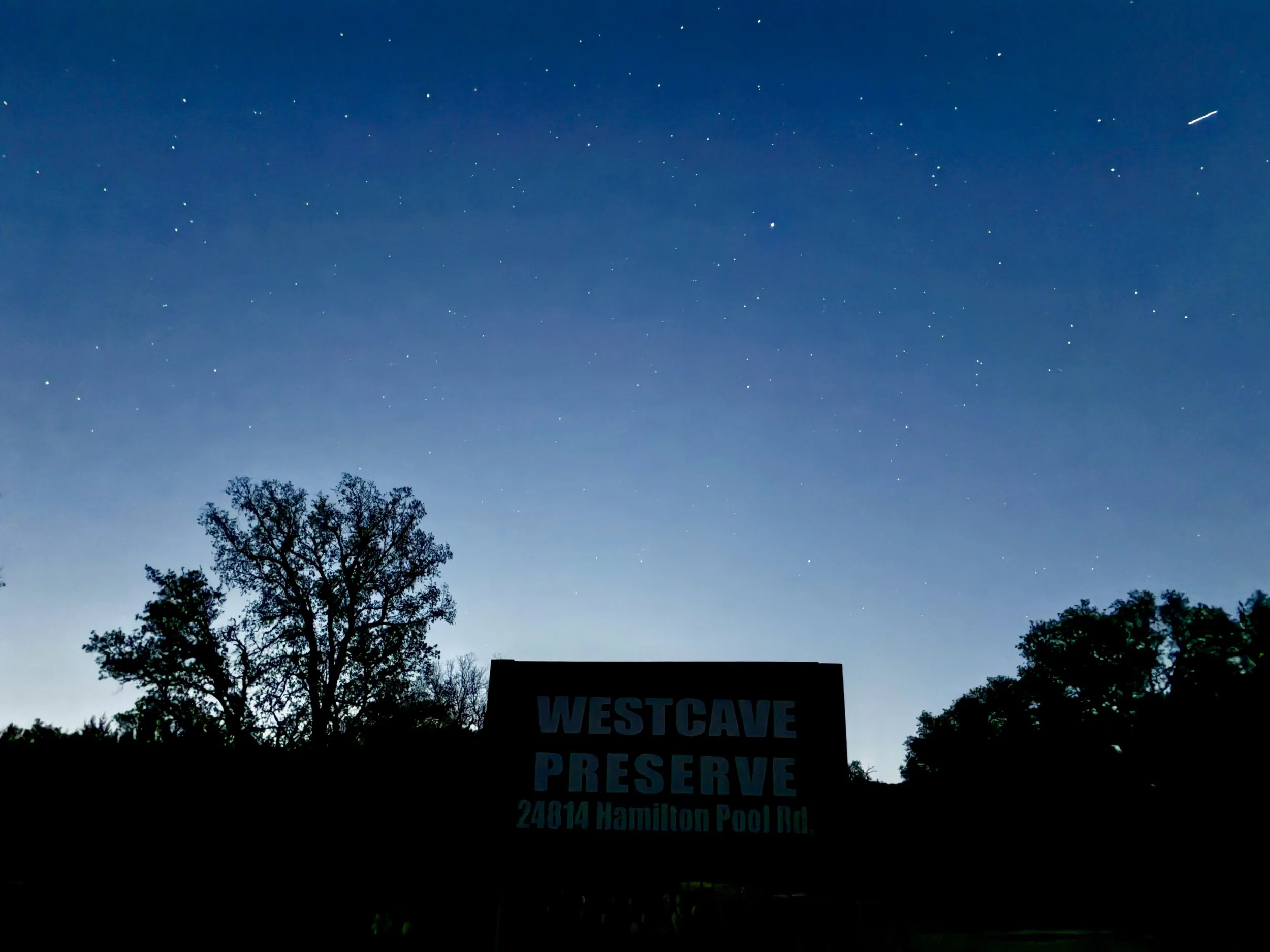
10/29/2025
How We Measure Darkness
SQM
By tracking sky brightness with a Sky Quality Meter (SQM) at consistent intervals and under clear, moonless conditions, we are able to assess the effectiveness of lighting policies and document the quality of our night skies. These efforts aim to illuminate the impact of artificial light on natural ecosystems and human well-being.
Observation
Observational measurements can be taken to show the “darkness” of the sky, following the Bortle scale, where 1 is an excellent dark sky, similar to what one might see at Big Bend NP, and 9 is what one may see in downtown Austin. Night sky averages at Westcave fall under the Bortle Scale class 4, or a range of 20.8-21.3 on the SQM mag/arcsec2.
Westcave also incorporates night sky programming to raise awareness of light pollution and its ecological effects. This includes star parties with local astronomers and educational nightly walks.