
Chimney Swifts
Supporting Chimney Swift conservation through nesting and roosting structures, and community science monitoring.
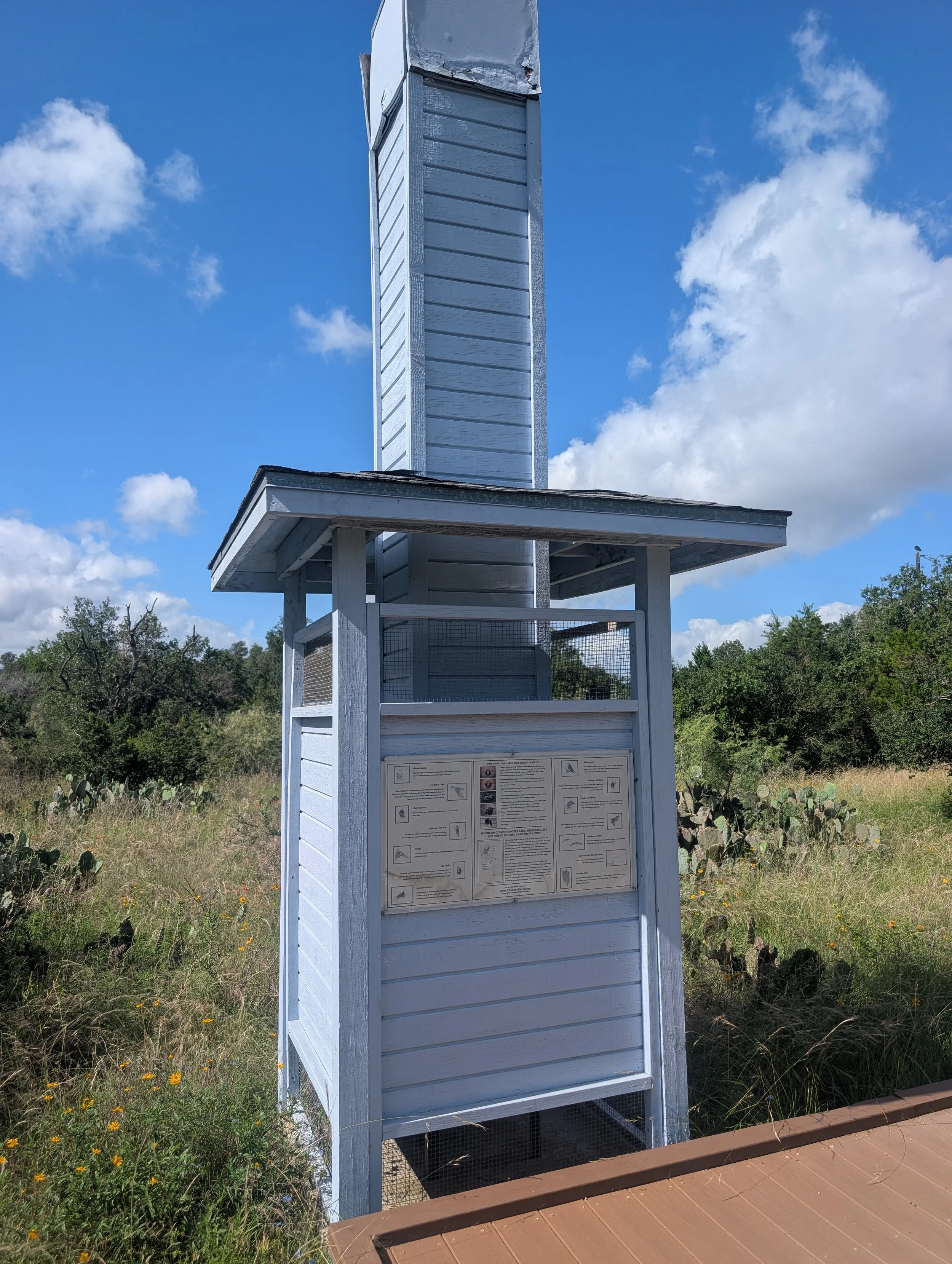
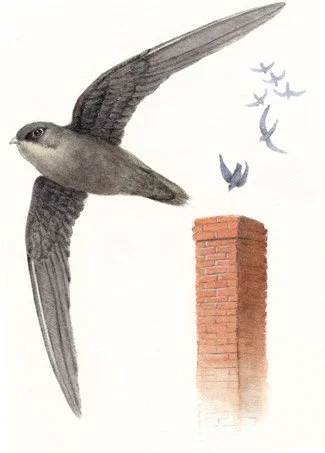
Chimney Swifts can be found throughout the eastern United States. Their name comes from their common use of chimneys and similar vertical structures for nesting and roosting. Historically, Chimney Swifts nested in large hollow trees, but habitat loss and the decline of old-growth forests led them to increasingly rely on human-made structures. Today, many Chimney Swift populations depend almost entirely on chimneys, towers, and other suitable vertical spaces.
Across their range, Chimney Swifts have experienced significant population declines. Westcave’s Chimney Swift tower was built in 2017 to provide a safe nesting and roosting structure for swifts. The tower also serves as an educational and research tool, allowing staff, volunteers, and visitors to observe swift behavior and contribute to community science efforts.
How We Collect Data
Roost Counts
Monitoring takes place at dusk. Observers watch for birds circling and entering the roosting structure for the night. Using the manual clicker method, each swift is counted as it enters the roost.
Research Contribution
Observations are entered into eBird and A Swift Night Out. These programs collect count data from across the continent to help track migration timing, population trends, and the use of roosting habitat.