
Cave Research
Westcave’s shallow, well-ventilated cave provides a unique setting for studying biodiversity, water flow, and climate history in Central Texas.
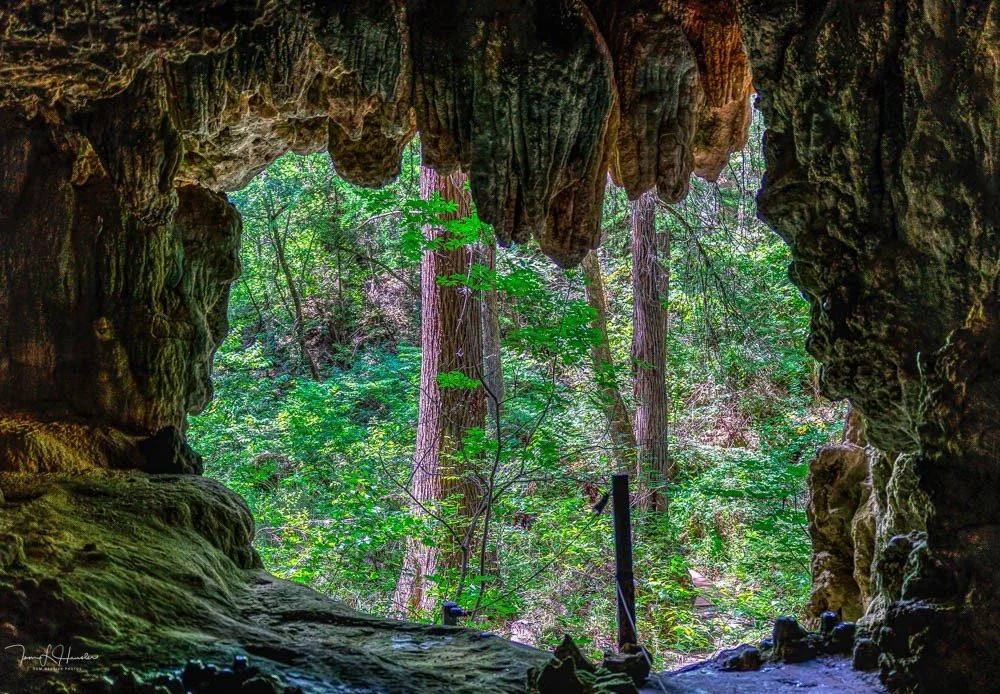
Why Westcave’s Cave Is Different
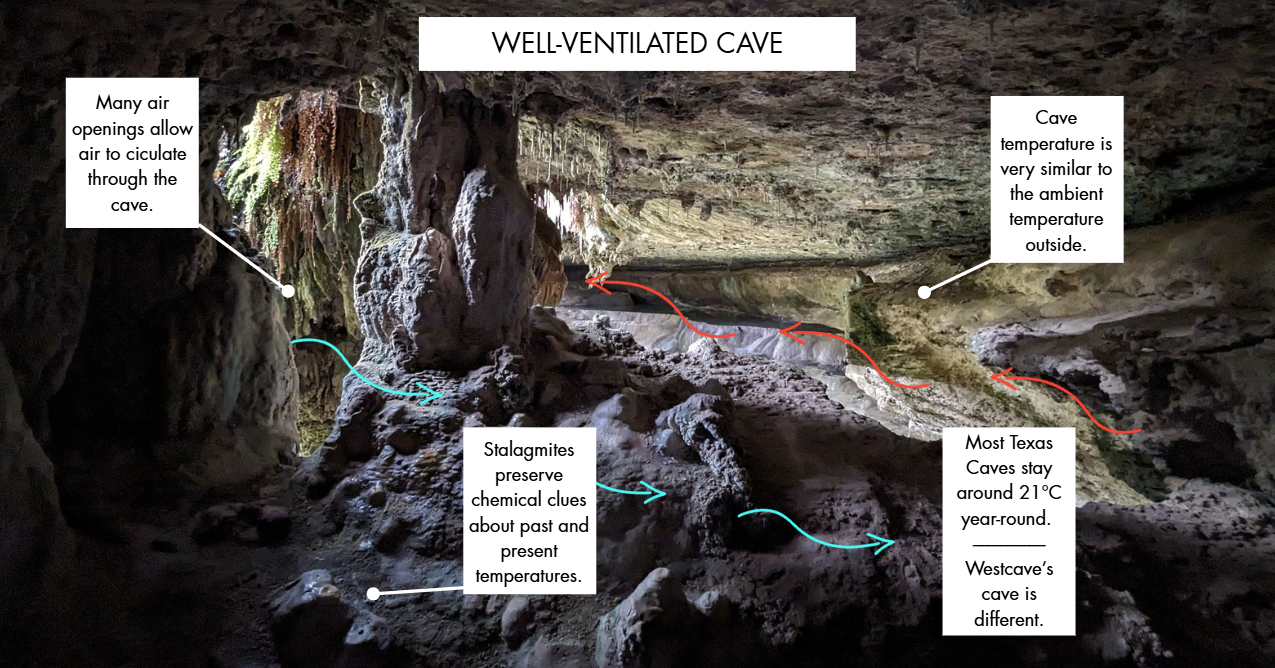
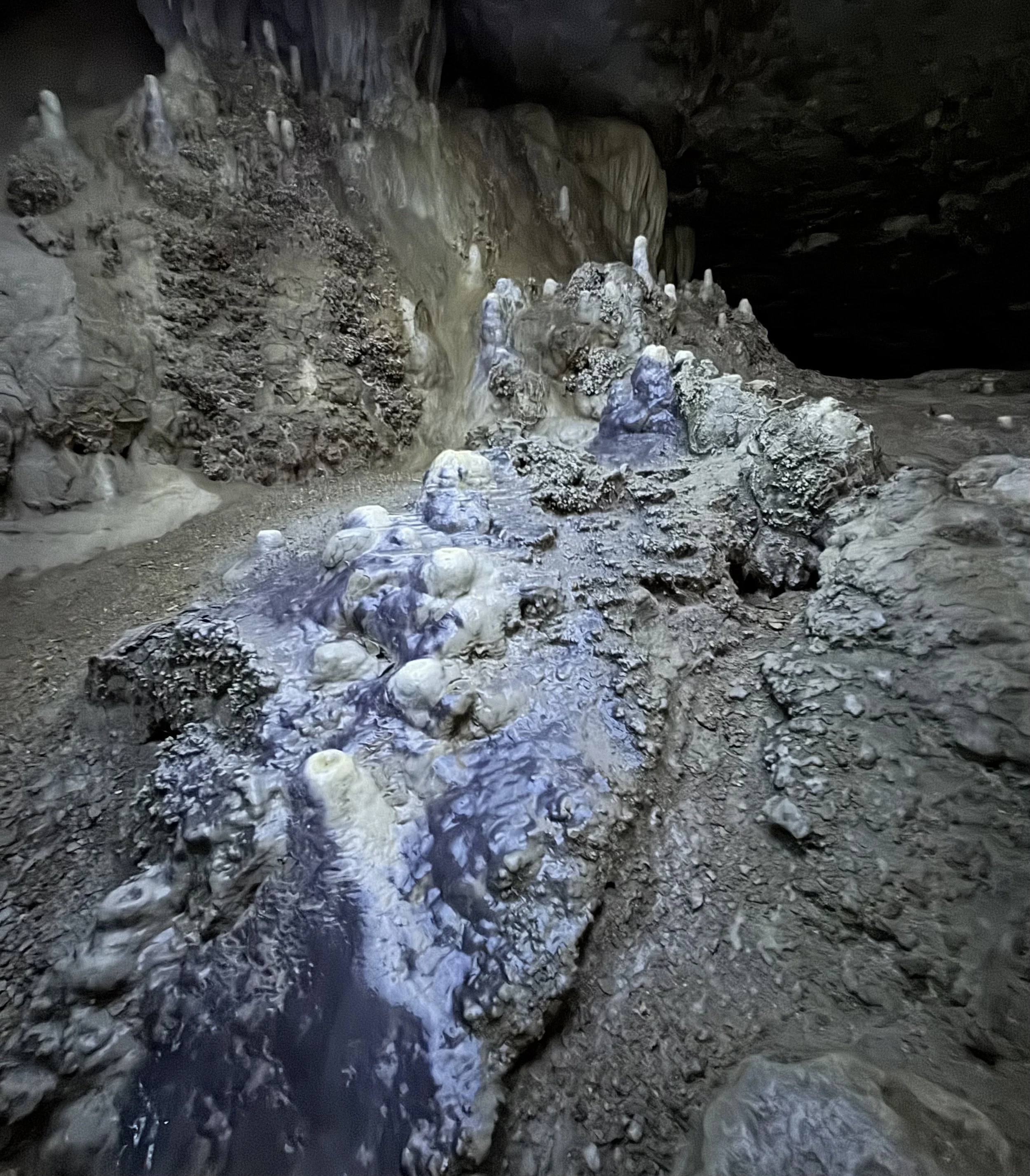
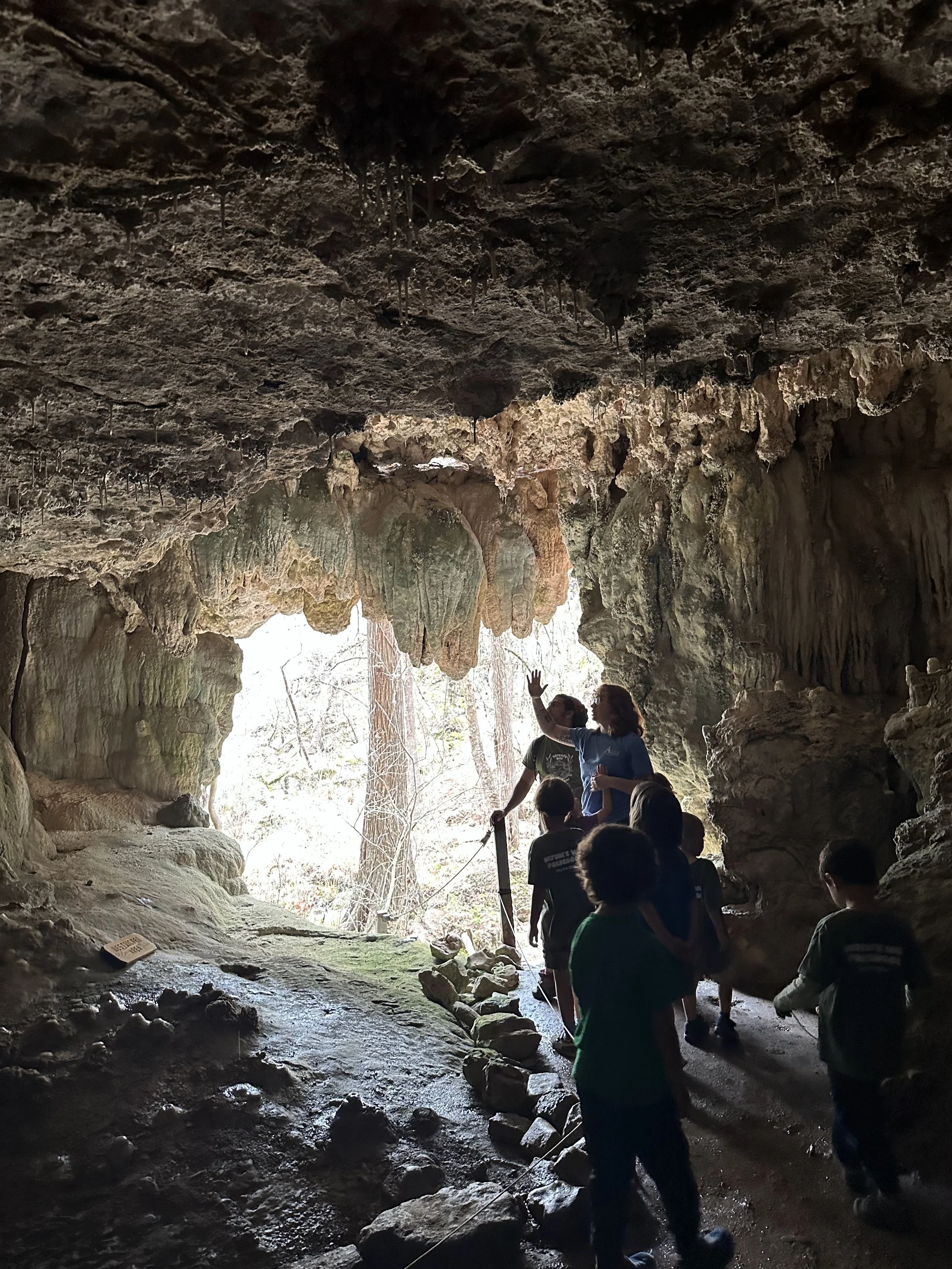
Westcave’s cave is small, shallow, and above ground, with openings that allow outside air to move through the cave. This makes it a well-ventilated cave, meaning its internal temperature closely follows the temperature outside.
In most Texas caves, temperatures remain relatively stable near 21°C year-round. Westcave’s cave is different: published monitoring has shown that its cave-air and drip-water temperatures rise and fall seasonally. This makes Westcave a useful research site for studying how shallow, well-ventilated caves record environmental change.
Cave Biodiversity Survey
Westcave is a valuable site for biological surveying. The last survey of cave life prior to recent efforts was conducted in the 1961 and identified only one species. In 2019, in conjunction with Travis County Natural Resources, we began a quarterly survey of the cave’s invertebrates and other faunal species. Since then, we have recorded over 50 different species living in our cave system. These observations continue to contribute to a growing understanding of the rich biodiversity that resides within shallow cave systems like Westcave’s.
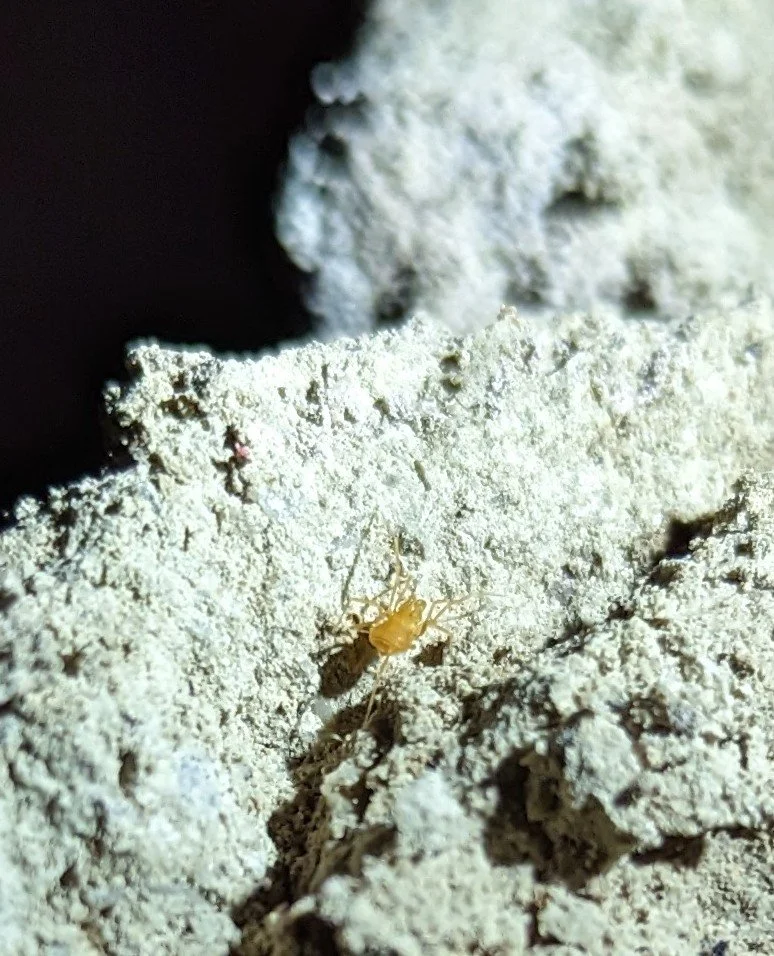
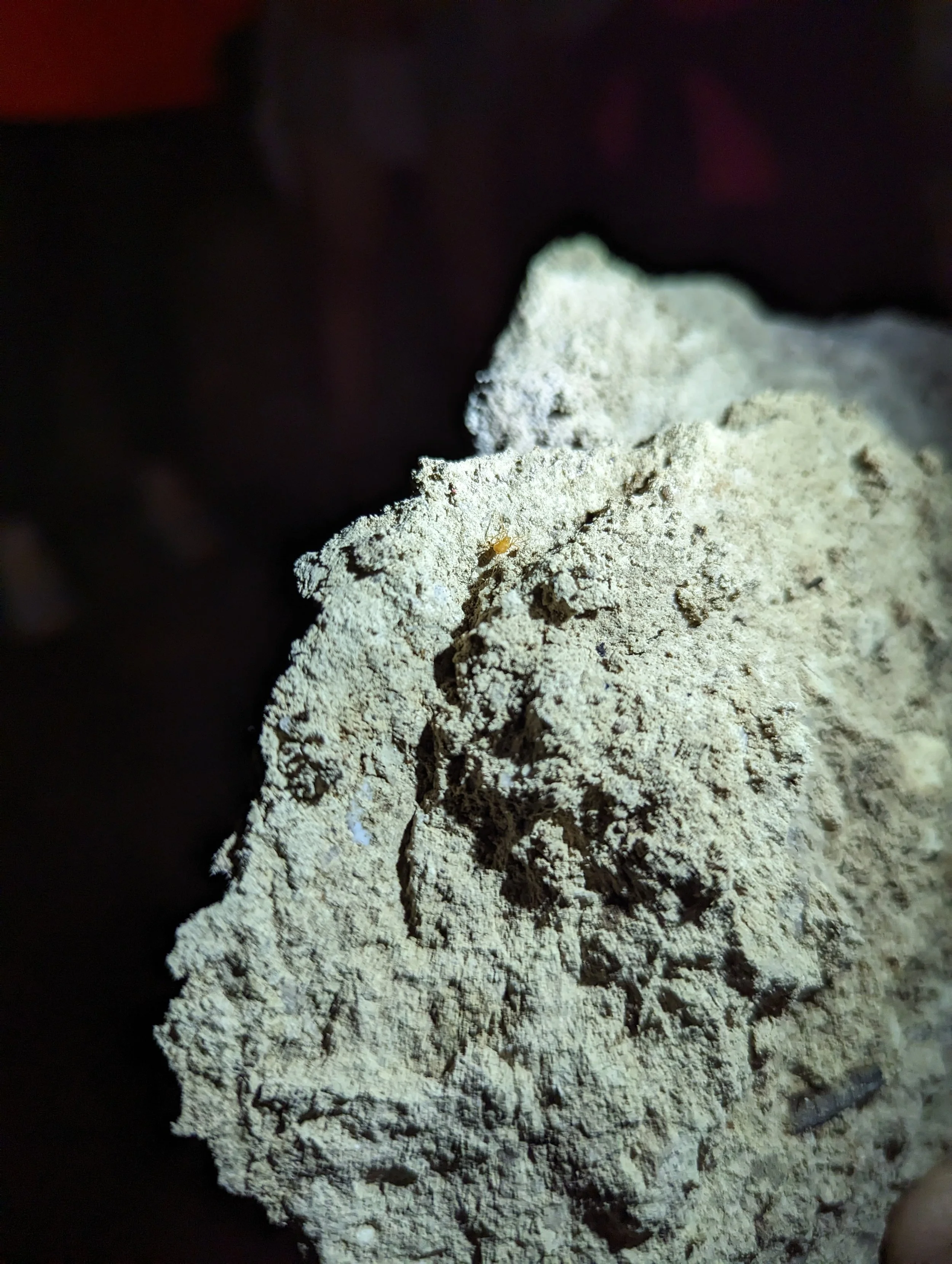
Some species include Texella (pictured above), Ceuthophilus Nymph, and members of the moth family Tineidae.
Researchers from the Jackson School of Geosciences and the Environmental Science Institute at the University of Texas have conducted long-term research at Westcave to better understand how shallow, well-ventilated caves can record environmental change. Their work uses Westcave as a natural research site to study changes in temperature, water flow, and the movement of carbon from surface organic matter through limestone and into the cave system. This research has been led by Professor Jay Banner, alongside collaborators including Peter E. Carlson, Alex Janelle, Richard Casteel, Barbara Wortham, Josiah Sanada, Will Eagle, Vivian Yale, Dr. Weimin Feng, Dr. Dan Breecker, and Dr. Jose Abella.
To learn more, please visit the Banner Research Group website: https://www.jsg.utexas.edu/banner/.
Climate, Water, and Carbon Research
-
Feng, W., Casteel, R.C., Banner, J.L., Heinz Fry, A., 2014, Oxygen isotopes of precipitation, cave drip water and speleothem calcite from a well-ventilated cave in Texas, USA: Assessing a new speleothem temperature proxy. Geochim. Cosmochim. Acta 127, 233-250. DOI: 10.1016/j.gca.2013.11.039. (Article)
Carlson, P.E., Miller, N.R., Banner, J.L., Breecker, D.O. and Casteel, R.C., 2018, The potential of near-entrance stalagmites as high-resolution terrestrial paleoclimate proxies: Application of isotope and trace-element geochemistry to seasonally-resolved chronology. Geochimica et Cosmochimica Acta 235, 55–75. (Article)
Carlson, P.E., Banner, J.L., Johnson, K.R., Casteel, R.C., and Breecker, D.O., 2019, Carbon Cycling of Subsurface Organic Matter Recorded in Speleothem 14C Records: Maximizing Bomb-Peak Model Fidelity. Geochimica et Cosmochimica Acta 246, 436-449. (Article)
Casteel, R. and Banner, J.L., 2014, Temperature-driven seasonal calcite growth and drip water trace
element variations in a well-ventilated Texas cave: Implications for speleothem paleoclimate studies. Chemical Geology 392, 43-8. (Article)
Wortham, B.E., Banner, J.L., James, E.W., Edwards, R. L., and Loewy, S., 2022, Application of cave monitoring to constrain the value and source of detrital 230Th/232Th in speleothem calcite: Implications for U-series geochronology of speleothems. Palaeogeography, Palaeoclimatology, Palaeoecology, 596, 110978. (Article)
Cleaveland, M. K., Votteler, T. H., Stahle, D. K., Casteel, R. C. and Banner, J. L., 2011, Extended chronology of drought in South Central, Southeastern and West Texas. Texas Water Journal 2, 54-96. (Article)