
Bat Research
Monitoring seasonal emergence, species presence, and bat activity across Westcave’s Uplands.
Why We Monitor Bats
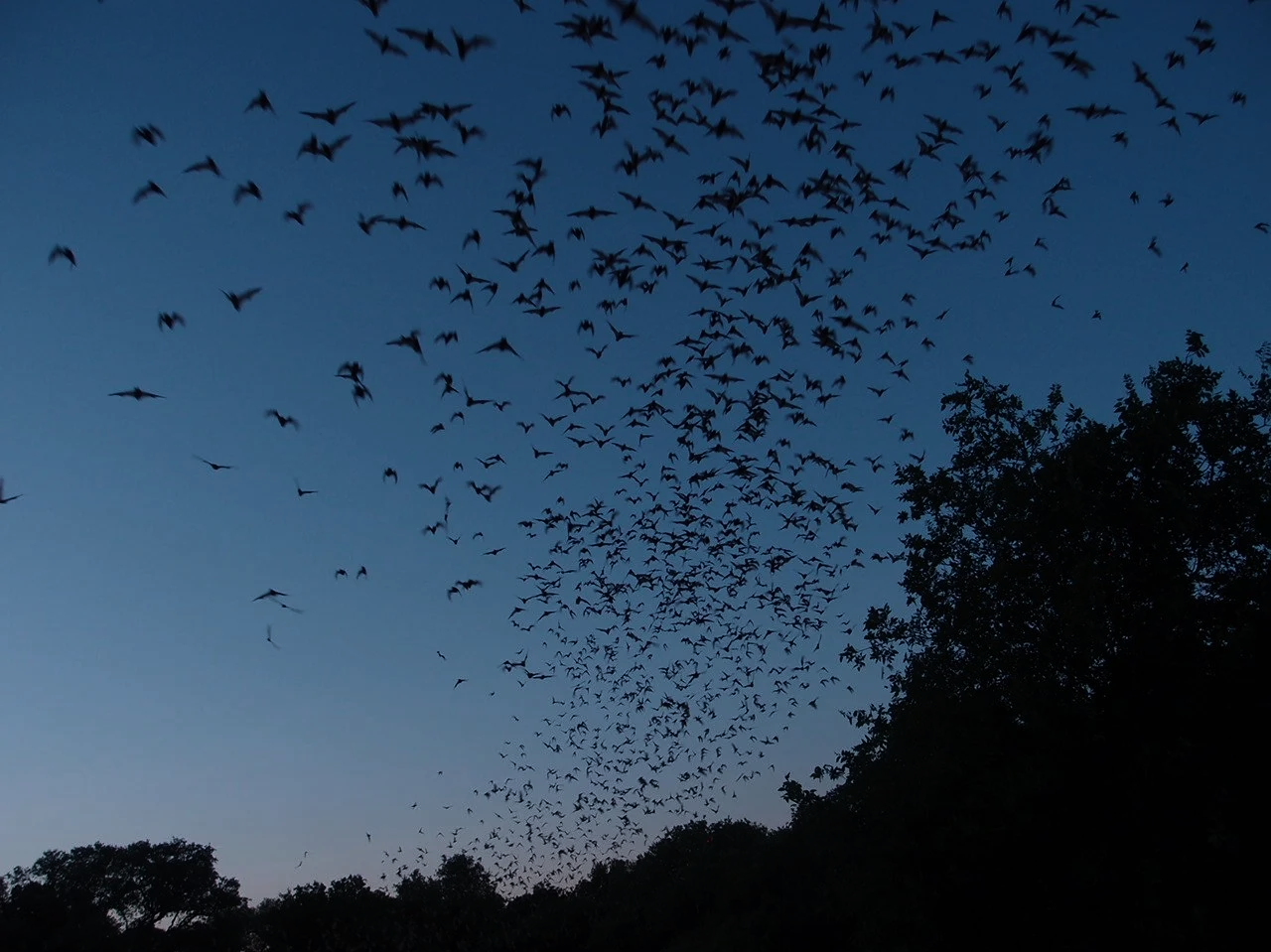
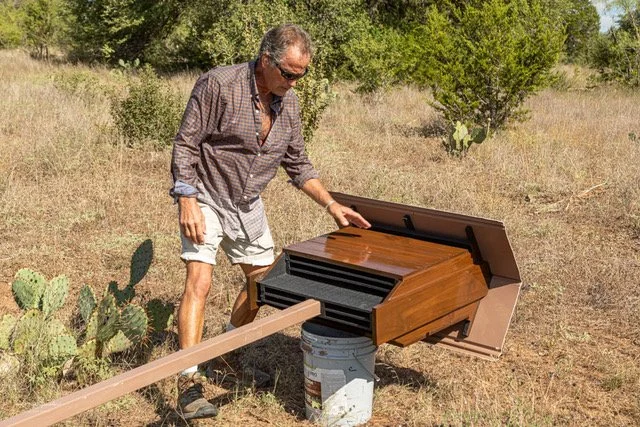
Each spring and fall, Westcave tracks the seasonal return and departure of its free-tailed bats through systematic emergence counts. Since the installation of a large-capacity megabat house— generously donated by Merlin Tuttle’s Bat Conservation— the preserve has recorded peak emergence counts of up to 667 bats exiting the structure at sunset, using a manual clicker method.
The megabat house can hold up to 1,000 bats and provides a unique opportunity to monitor population trends and activity patterns from May to November. These evening counts, conducted at the Uplands megahouse, offer valuable insights into seasonal bat behavior and habitat use.
What We’ve Found
Through acoustic analysis, incidental data collection in our cave, and long-term emergence counts, Westcave has confirmed six bat species on the preserve. These species play important roles in the ecosystem as insect predators, helping support the balance of the Hill Country landscape.
Confirmed bat species include:
Western small-footed bat
Tri-colored bat
Eastern red bat
Mexican free-tailed bat
Hoary bat
Big brown bat